Post
My Meat Beat Manifesto
My definition of house our house
Between the magazine and the forum
The Pulsers Journal is an open blog, somewhere between a magazine and a forum.
To write an article, you ask your AI agent (Claude, ChatGPT, Le Chat) to use Pulsers to write an article. You provide the content, however you want:
- a text you’ve already written and pasted in;
- a text you dictate to it;
- or simply what you feel like talking about.
Your agent can also write based on your ideas: this is possible, but not mandatory, and in our opinion, it’s better for the words to be your own.
Your agent looks up templates (patch explanation, module review, tutorial, rack tour, post, question) and layouts in Pulsers, and suggests them to you. It cites your patches, your racks, and the modules you’re talking about: Pulsers draws them in the article, fully playable. You review a private preview, drop your photos in, and then the team reviews it before publishing. The article is translated for readers of the other language, French or English.
All subjects are welcome, as long as they respect the writing charter: no racist remarks, no macronist scumbag remarks. There is moderation: the team decides whether an article goes through or not. Our angle is machines, synths, music, but you can go beyond that: explained patches, module reviews, rack tours, tutorials, opinion pieces, metaphysical and philosophical questions like "I’m sure Pulsers resells data to Meta," or whatever else, and anything else we haven’t thought of. Truly, everything is connected in life: every point that links the spiral.
-
You talk to your agent.

-
It suggests a template and layout.

-
You read the private preview and drop your screenshots.

-
The team reviews and publishes.

-
The article is published in both languages.

An old-school website
I could have made this Journal an Instagram page, a Facebook page, or posts on Twitter, or X as they call it now, that techno-fascist app I’ve never used, which some people I’ve run into prided themselves on being pioneers of, even though they were just massive opportunistic pricks like the web has seen boatloads of a thousand times over. Anyway...
In the end, I’m writing on this old-school website. It’s a choice, and I think it’s a possible future for the web: returning to what existed in the 2000s and pre-2000s. I lived through the early days of the web, and what was pretty cool about that eldorado is that it was a bit freestyle. We had our pseudo-blogs and pseudo-websites to write whatever we wanted, without it always being the same people benefiting or algorithms deciding on our visibility. Well... somewhat.
This is the era when I designed web interfaces, every single button down to the pixel, folks... And yet, I’m not old, just young for a long time.
All these algorithms might just be a way to tell them to fuck off and reclaim the tools, even if, obviously, they’re the ones selling the shovels and you’re the ones digging. You might want to dig without buying the shovel. I’m not the one selling them. It would probably be desirable for the shovel to be available by default and for free anyway, in my opinion, but that’s a topic for another post.
No more back-office
A MCP (Model Context Protocol) is an open protocol, introduced in late 2024, that allows an AI agent to use a website or service on your behalf. The site describes what it can do in the form of tools: search for a module, create a patch, submit an article. Your agent reads these tools, understands what they are for, and calls them when you ask it for something. You plug Pulsers into your agent once, authorize it, and from then on you talk (or write) to it: it fills things out, and Pulsers checks and organizes them.
That’s why we think this could become a standard way to publish on the web. No more back-office, forms, poorly made editors, WordPress, or Wix. You chat with your agent, interview-style if you like, or submit a very specific text to it. It then asks you if it should keep every single word you wrote and only handle the layout, or if it can rewrite, rephrase, and then lay it out. You save a tremendous amount of time.
For this to work, you need well-made MCPs and templates designed by designers: your agent lays things out according to these templates, it doesn’t invent them. Humans remain where they are better than AI: what they have to say, the writing, the design, the feeling. Filling out a form isn’t very interesting; AI can do that.
Archive, learn, share
At the start, there’s a very simple problem: finding your own patches. Tools are scattered all over the place: one site for a module, another for your rack, a notebook for your patches, screenshots scattered everywhere. Pulsers was born to bring them together. While building it, we realized it’s much vaster.
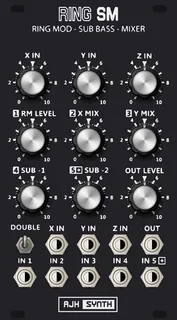
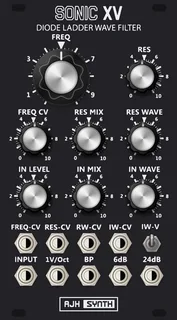
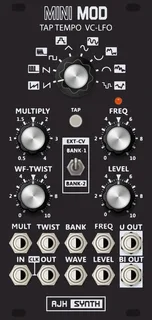
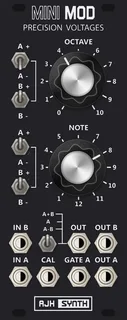
Synths are drawn according to their real dimensions, down to the millimeter, so that the panel looks like the machine: every jack, every knob, every toggle switch is in its place. You patch cables and tweak knobs with the mouse, just like on the instrument.
What is it for? To archive your patches. To document, learn, and share a patch. It’s a gateway for beginners, an educational tool, a sharing tool, many things at once. Every patch comes out as a printable diagram: you print it out, play it live again, and easily find a patch. And all this can be done with your agent, which is much less tedious than writing, drawing, and copying things down.
But a patch is a starting point, not an end goal. The point of a machine is to experiment. Afterwards, you play with the machine, and that’s really what stays with you.
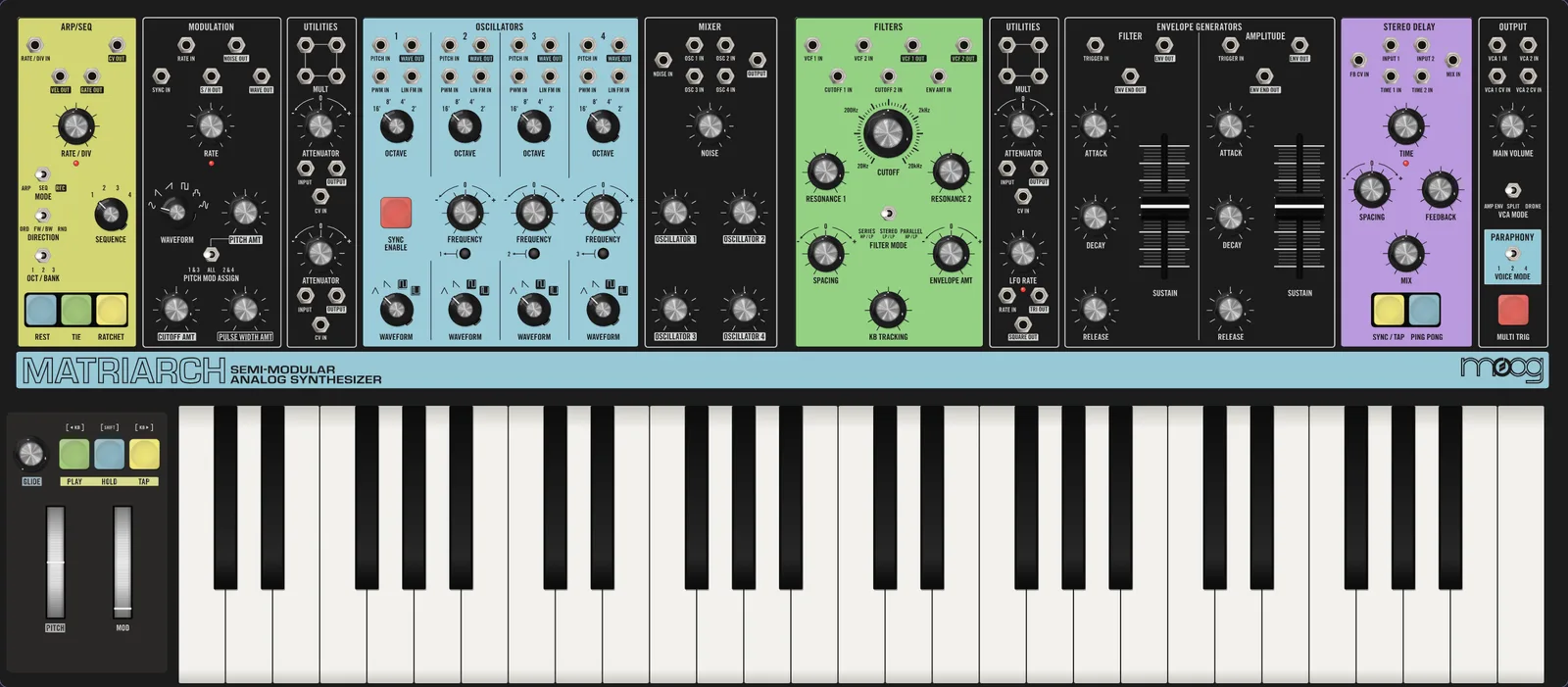
Planning and organizing your rack
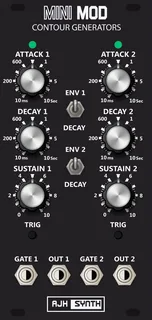
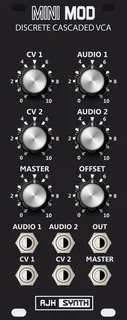
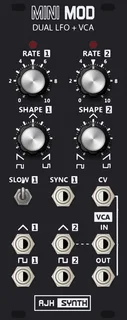
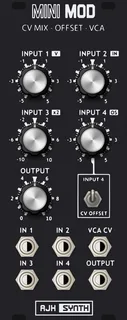
For Eurorack modules, it’s the same idea: archiving, sharing, and above all, planning. Every module is drawn according to its real dimensions, with its width, power consumption, and depth. You build your rack row by row, and you see how much power it draws, how much it costs, whether it fits in your studio or your fly case, and how you’re going to wire it up.
This works for the rack you’re planning just as well as the one you already own: you can plan, and you can also organize. Then, you switch to Patch mode and wire it up just like the real thing.
Your agent can already build a rack for you, based on a list of modules or a photo, placing each module in its row. Asking it to reorganize an existing rack is one of the things we’d like to add.
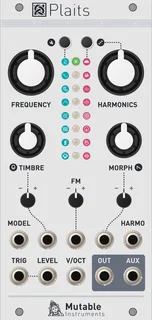

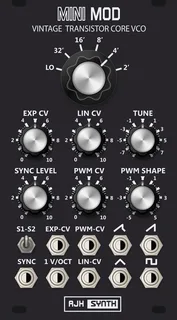
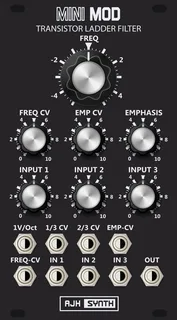
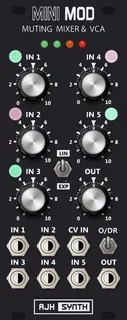
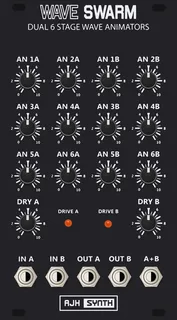
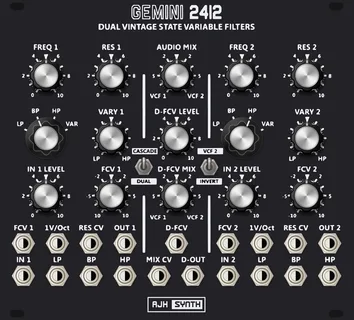

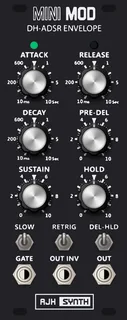
Your entire setup
A table is your actual studio or live table: your synths, your racks, your MIDI converters placed side by side, just like at home. You cable them together, via jack as well as MIDI, and the patch covers the entire setup, not just a single machine.
The idea is to be able to organize a studio, a live setup, a fly case, a minimal setup, no matter what. And to retrieve later a patch you made, a configuration you put together. Just like a patch or a rack, a table can be saved, copied, and shared.
Ask for a patch, or a rack
You can also ask. On the site, the patch generator suggests a patch for a synth or a rack, based on what you want to hear. A photo of your synth or your cabled rack is enough for Pulsers to recognize the patch and trace the cables. A photo of your rack is enough for Pulsers to find the modules and build it. These analyses cost credits, the first one is free.
With your agent, it’s the same thing, right in the conversation: you give it the photo of your rack or patch, it reads what it sees and saves it to your account, privately until you publish it. Pulsers checks every module and every cable before saving anything.
AI, in November 2026
I know some of you are against AI. Here is what I personally think about it, as things stand, in November 2026. This might evolve: that’s already what happened. A few years ago, I didn’t think the same thing about AI, and I left myself the option to see what it was. AI moves every day.
For me, the problem is neither the technology nor the tool itself. It is, as usual, political and systemic. What’s wrong is once again capitalism, in its most radical form: the fact that the financial aspect is criterion number one. One of the possible, and surely desirable, futures is to democratize the tool, not reserve it for those who can afford to use it, and make it more ethical and ecological.
I’ve happened to use Kimi and that kind of AI, and I still hope it will become accessible to everyone, and that there will be one that is neither necessarily Chinese nor tied to some empire, so we can break free from these corporations, starting with Meta and Big Tech.
In any case, yes, on the ecological side, there are bound to be tech solutions underway to be imposed or normalized, so to speak.
The question of data centers is a real question. I care about ecology: I’m well past fifty, I’ve been a vegetarian for fifteen years, I’ve flown in a plane four times in my life. In short, I’m not particularly keen on it being 60°C in the summer and 40°C in the winter. But let’s not be fooled: some ongoing projects are energy-intensive and dangerous, and we mustn’t gloss over that.
It’s the trajectory that’s the problem.
I care about what remains of our humanity, and that is undoubtedly the question it poses to creation and the arts. Today, it’s a tool that isn’t always used well, but it can be formidable. That’s my intuition today. If one day it evolves in the wrong direction, which I don’t wish for, I will acknowledge it, and I’ll do what I’ve always done: make choices.
Water, electricity: the numbers
In 2024, the world’s data centers consumed about 415 TWh of electricity, roughly 1.5% of global consumption, according to the International Energy Agency. AI only accounted for a fraction of that, around 10%. On the water side, two-thirds of what data centers consume goes toward producing their electricity, and a quarter toward cooling the servers.
At the scale of a single query, the published figures are low: 0.24 Wh and 0.26 mL of water for a median Gemini query according to Google, 45 mL of water for a response from Le Chat, manufacturing and training included, according to Mistral. But these figures are published by the companies themselves, without external verification, and Bon Pote considers them selective.
The trajectory, however, is worrying. The IEA forecasts that data centers will consume more than double by 2030, around 945 TWh, and those dedicated to AI more than four times more. Their water consumption would double as well. Some of these projects run on gas: turbines beyond what permits allow in Memphis for xAI’s data center (Scientific American), and an investigation by US senators into Meta, OpenAI, xAI, and six others (Latitude Media).
Technical solutions exist (apparently, because unlike the sycophancy of the macronist assholes I’ve crossed paths with in my recent professional life, I’m not an engineer either: I simply relay sources found on the web, which I cross-reference and share, to also explain my intuition): closed-loop cooling, which consumes almost no water anymore; natural cooling via air or cold water; server heat used to heat homes, in Odense, Denmark, or Tallaght, Ireland; renewable electricity, 27% of that used by data centers today according to the IEA.
If we don’t take this path, it’s not technology’s fault: I feel like it’s more the ultraliberalism of motherfuckers.
A tool, not a start-up
Back to basics: originally, Pulsers was a tiny tool, there wasn’t much more to it. The idea was simply to be able to manage and archive our patches, plain and simple. We then wanted to share it, and one thing leading to another, here we are.
For now, it’s Lucile and me using Pulsers. Maybe it will stay that way. And maybe people will want to make the tool their own. It serves us, not to make millions: Pulsers is free. Only the site’s AI services cost money. If you use your own agent and query Pulsers via the MCP, it is entirely free. Donations go toward paying for the services, not enriching me: I’m a freelance worker, never on a fixed income. I do this because it’s part of my path, and because I needed this tool.
Eight months ago, I was coding Pulsers much more by hand than I do today; today, that’s not really necessary anymore. That’s what changed. In my profession, we’re at the forefront of these tools, and certain things don’t really exist anymore. I can certify that the game has changed, and our world must change too. Maybe toward a more dystopian society, which I don’t wish for, or conversely toward a more utopian society, where we would benefit from these tools without being naive.
I don’t want Pulsers to take up all my time: I’m not in start-up mode, working seventeen hours a day like I’ve done for the profit of others (true vulgarity is right there). I do this on the side, it’s a tool for the people, and I spend an hour on it whenever I feel like it, that’s all.
Pulsers doesn’t track you, doesn’t sell anything, and doesn’t leak anything. For the curious, everything is explained in the footer: what we keep, why, and who sees what. I understand the distrust, but we can also try to live in a world where we trust each other a little bit.
Where we'd like to go
First, that you easily write what you feel like saying, without going through a protocol. The only protocol is the MCP, and it’s technical: there is no moral or mental protocol. You just need to have the urge to talk about something, and the desire to use the tools available.
Next, automating more and more. Perhaps allowing everyone to create modules. And moving increasingly toward DIY, toward hardware.
Software is dead, long live software.
What is dead is the development of software as it used to be done. Hardware remains. Pulsers could also be a learning tool: I’m on that path myself, trying to learn.
Yes, you can make a hundred VST plugins, why not. Personally, I don’t see any problem with that, even though I see messages from people who are fiercely opposed to it.
Personally, I haven’t gotten into it, because first of all, I don’t like the sound a computer generates at all, even though, obviously, I made a lot of music on one before I could afford machines, because machines still have a cost. My passion today is machines, not computers, so not plugins at all. Honestly, I want to run away from the computer, because I spent a lot of time on it in my job, and that’s actually what led me to machines.
That’s not an absolute truth, though: there are people who do great things with digital tools too. Autechre, in particular, does wicked things with Max for Live, and their concert in the dark was mind-blowing. Or that Pure Data thing, now that’s still interesting, but anyway... you get the idea.
Why not make hardware easier too. Kill it so it can be reborn, basically, and put it into everyone’s hands.
There too, there would be a debate about components, which I won’t get into in this post. What I see is that hardware is also a fascinating playground, and that could be made easier soon.
And finally, everything I haven’t developed yet: broadcasting tracks, sharing them, sharing experiences, concerts, real-life things, human things. Everything it leads us toward is good to take, as long as the journey is nice.
Anyway, why not...
So that’s roughly, pell-mell, what I think right now. I’m going to go make some music now, because we unemployed folks are like that, so I’m going to stop writing all this stuff or asking Claude to write what I’m telling it orally so it can forward it to Pulsers. We’ll make it quick, and well, try it out if you feel like it. Otherwise, come back and read my scribbles, because why not, folks, why not.
Comments
0